SYNTH LAB
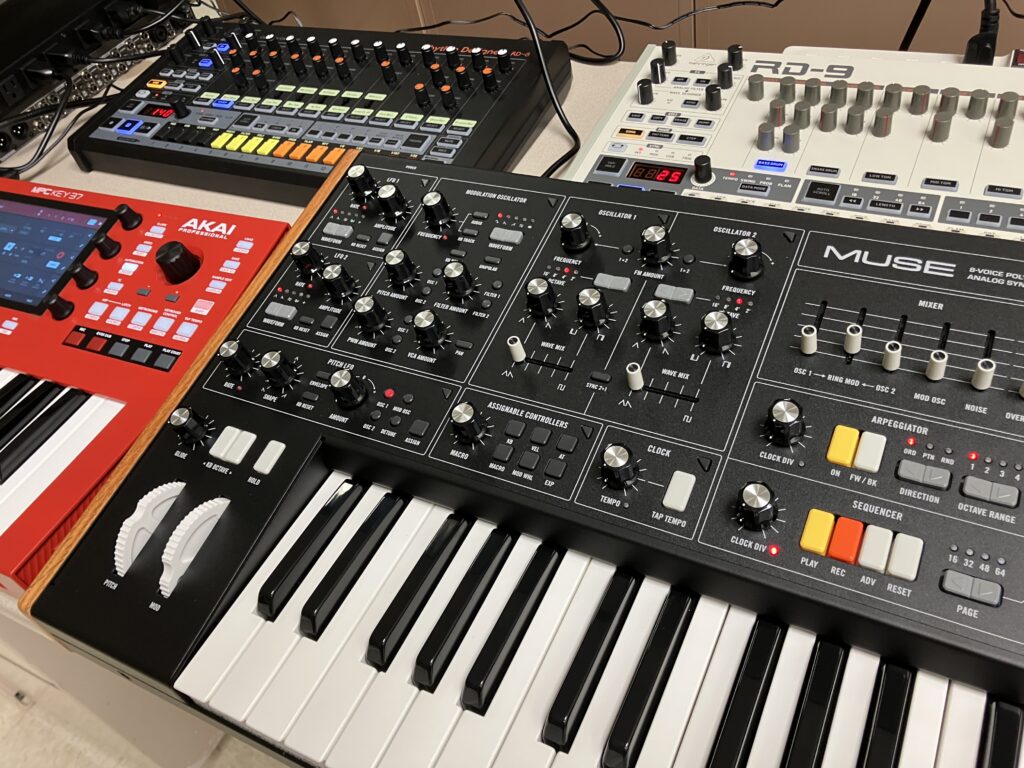
In Fall of 2024 the DAC was awarded WSU Student Technology Fee funding to create a space full of hardware electronic music instruments in the WSU Libraries Dimensions Lab. The Synth Lab is now available to WSU students, staff and faculty!
https://libraries.wsu.edu/synth-lab/
Why Hardware?
In the early days of electronic music, musicians began experimenting with electronic test equipment, tape machines, and record players. These efforts evolved into purpose-built devices made to generate and control sound. Through the efforts of many, including Don Buchla, Robert Moog and Serge Tcherepnin, analog synthesizers were born. These innovations of 1960s and 1970s had a profound influence on music and lead to what is commonly referred to as electronic music.
Music Hardware as Musical Instrument
Technological advancements have the expanded the possibilities of electronic music creation. Digital technology enabled the electronic music equipment industry to offer new electronic instruments to wider audiences. These included drum machines, sequencers, samplers, digital effects and digital synthesizers. The shift to affordable electronic music hardware allowed new communities to participate, outside of research and university settings. New forms of music emerged, such as hip hop and EDM. Today, many musical artists use hardware to make interesting and innovative music.
Computers & Electronic Music Creation
Computers have become a significant aspect of our lives, embedding themselves in the ways we work, communicate, learn and play. Most people born in the 21st century that have engaged with electronic music creation have done so on a computer, and they are more likely to consume music over a computer. Digital Audio Workstations (DAWs), software synths, plugins, and DJ apps provide seemingly limitless options, but they also pose challenges.
Music made on a computer is mediated by a screen and requires an understanding of how to create music within specific software applications. These applications influence how music is made and often what types of music is made. For example, a particular DAW may emphasize loop-based music creation, making it difficult to discover other compositional approaches.
The biggest challenge however, is that we use the computer for so many things and we get easily distracted. Rather than record and sequence and mix, we might find ourselves checking our social media accounts, responding to messages, or watching the next episode of a streaming series.
Immediacy. Limitations.
Hardware instruments are devices that serve a specific function limited to music making. They offer an immediate entry point into music making. Pull up a preset, sequence a pattern, create a new synth patch and immediately begin to play, experiment, and make music.
Equipment
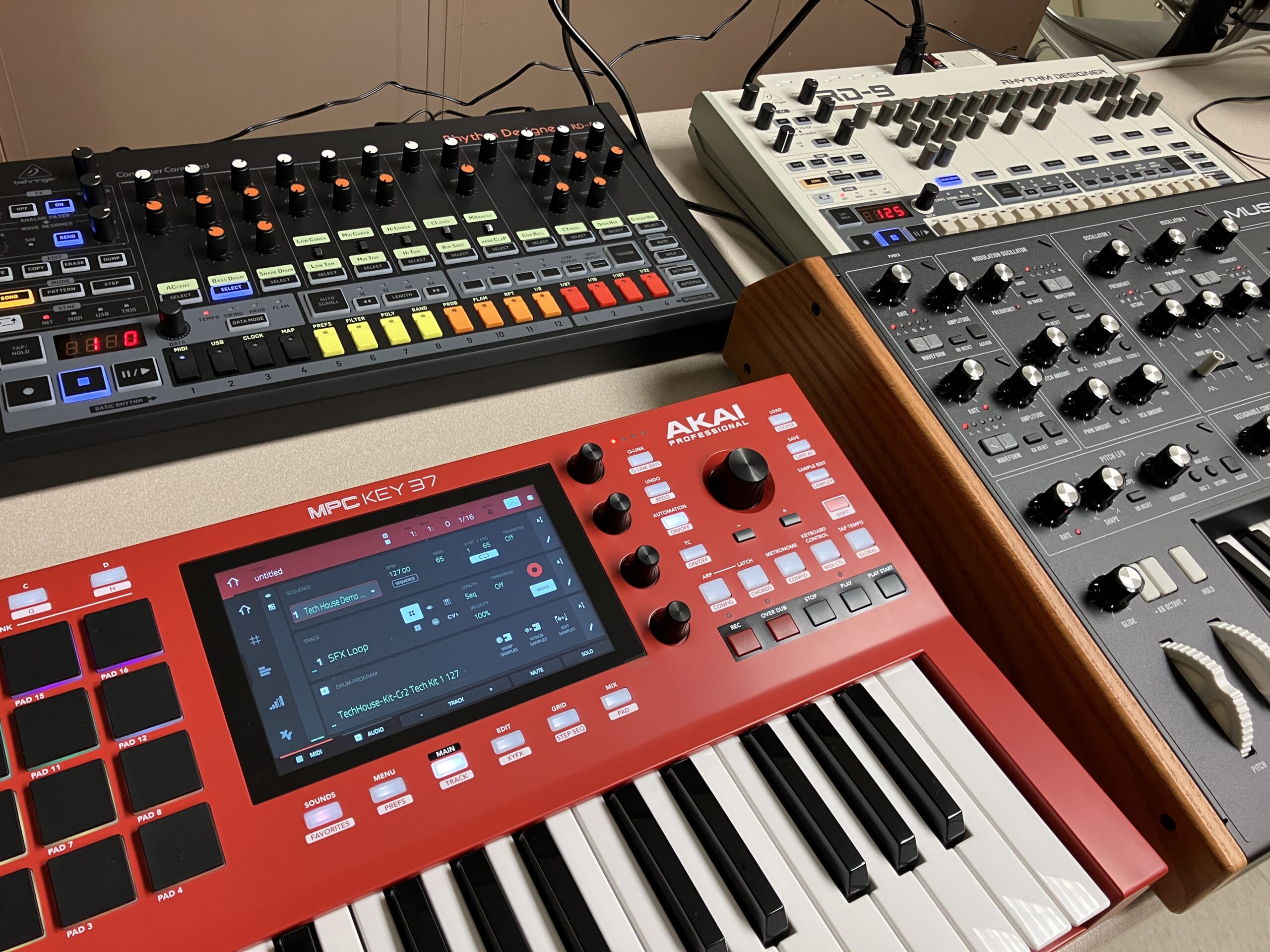
The Synth Lab contains a curated set of hardware musical instruments developed and used throughout the last 50 years that have been essential to the history of electronic music, specifically hip hop, EDM and experimental music. This equipment is either newly manufactured clones of older gear, or new and improved designs that take sound making to new levels.
The Digital Audio Collective began in 2023. Its members have been primarily interested and engaged in creating electronic music including hip hop, EDM and experimental music. The Synth Lab has been designed to support these interests.
Gear
Moog Muse – 8 voice analog polysynth
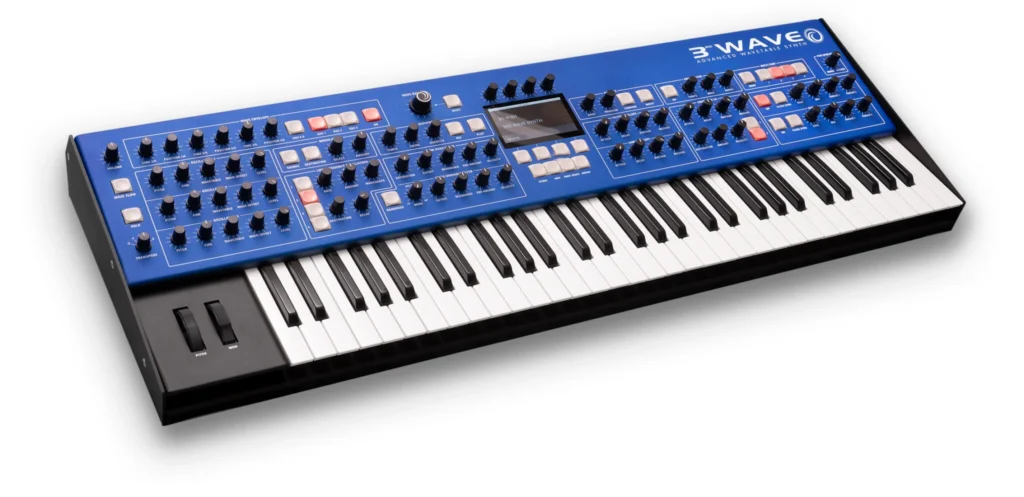
Groove Synthesis 3rd Wave – 24 voice wavetable synth
Komodo Essence FM MKII – 300 voice FM synth
Akai Professional MPC Key 37 – sequencer/sampler workstation
Electron Digitakt II – sequencer/sampler
Behringer RD-8 MKII – drum machine, Roland TR-808 clone
Behringer RD-9 – drum machine, Roland TR-909 clone
Technics SL-1200MK7 – turntable